
Ultrapool
offbrand gamesStrategy
4.9106.00 Reviews
- Version
- 0.14.13
- Installs
- 50.00K
- Age Rating
- Everyone
Screenshots
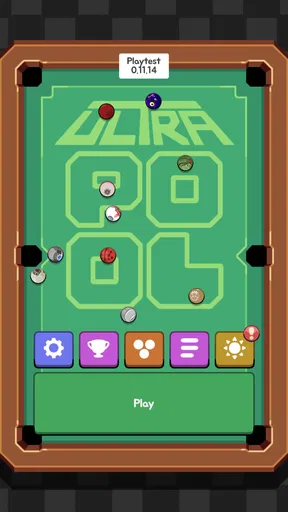
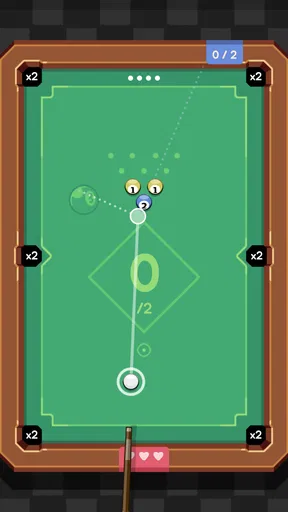
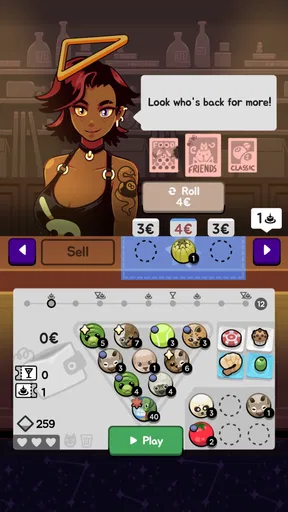
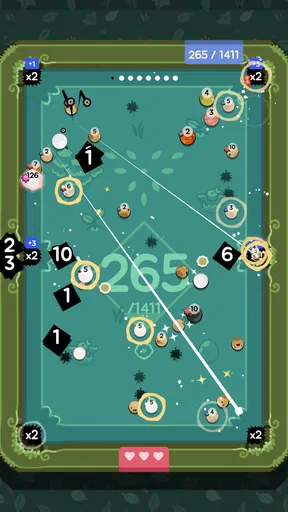
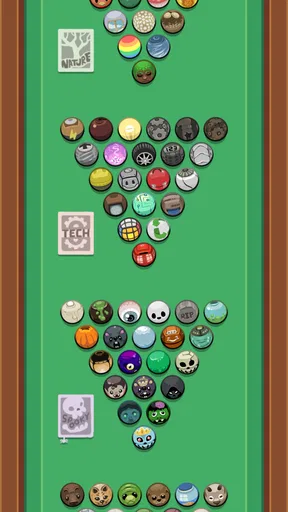
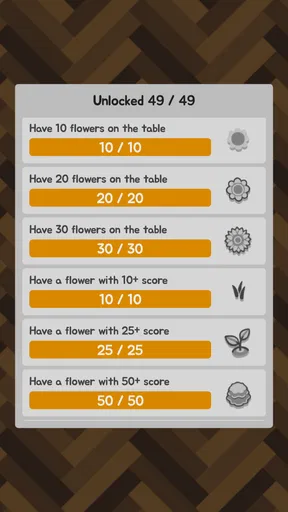
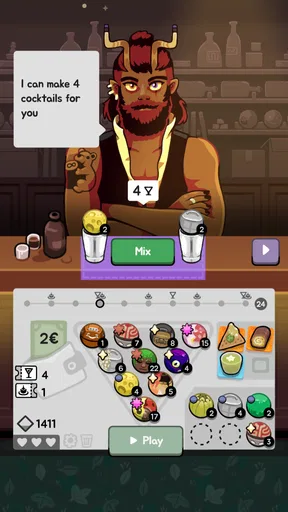
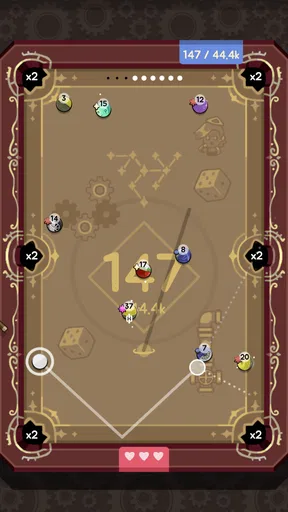
Our Review of Ultrapool
 Analysis by Appyee
I went into Ultrapool expecting a familiar pool game, but its roguelike angle changes the way I think about every shot. This is not simply a digital table where I try to clear balls as neatly as possible. Each decision feels connected to the next one, so a good turn is useful not only because it scores, but because it can make the following situation easier. That extra layer gives the game a more thoughtful rhythm than a standard pool app.
It is a free strategy game from offbrand games, rated for Everyone, and it runs on Android 7.0 or later. The store summary describes it as pool with a roguelike twist, which is brief but accurate: the appeal comes from combining familiar aiming with the uncertainty and planning associated with repeated runs. I found that combination easy to understand in principle, although it takes a few attempts before the strategic side becomes more important than simply trying to pot the nearest ball.
The game has already attracted over fifty thousand installs and holds a 4.9 average from around one thousand three hundred ratings, with just over one hundred written reviews. Those figures suggest that its focused idea is connecting with players, but I would not treat the high rating as proof that it suits everyone. Someone looking for a relaxed, traditional pool table may find the added structure distracting, while players who enjoy adapting to changing situations will probably understand the attraction quickly.
From the first launch to a meaningful run
I treat the first launch as a chance to learn how the table asks me to think, rather than as a test I need to ace immediately. In this section, I focus on turning familiar pool instincts into a deliberate opening routine, so each attempt teaches me something useful. That foundation makes it easier to understand how risk and reward shape the choices that come next.
What to expect before your first shot
The most useful mindset is to stop treating every turn as an isolated pool puzzle. In an ordinary pool game, I usually concentrate on the current target, the angle, and whether I can leave the cue ball in a convenient place. Here, I also think about what this shot is preparing me to do next. That does not make the controls mysterious, but it does make careless success less satisfying than a planned success.
For a first-time player, the game is easiest to approach in two stages. First, learn how the table behaves and become comfortable with aiming. Then, once the basic action feels natural, start asking why one legal shot is better than another. Trying to solve both problems at once can make the opening feel more complicated than it really is.
I also recommend short sessions at the beginning. A quick attempt lets you notice the relationship between positioning and future options without turning an early mistake into a long, frustrating commitment. This works especially well when you are playing during a break, waiting for an appointment, or looking for something more involved than a completely passive time-killer.
The roguelike influence is important because it changes how I judge failure. Missing a shot is not only a technical error; it may also leave a worse situation for the next decision. That makes the game more strategic, but it can be demanding if you prefer predictable progress. I enjoyed the sense that each attempt taught me something, although players who want a pure score-chasing pool experience may prefer a conventional alternative.
Getting comfortable with the opening setup
There is no need to rush through the first moments. I spent my initial attempts paying attention to the entire table rather than immediately focusing on the most obvious ball. Before committing, I look for crowded areas, awkward angles, and any shot that could leave the cue ball in a poor place. This habit is more valuable here than relying on instinct alone.
My practical advice is to begin with a simple objective: make one controlled shot and observe the result. Do not worry about producing a perfect run immediately. The first successful action should teach you how much planning the game expects, not merely confirm that the aiming system works.
When I approach a shot, I separate three questions. Can I hit the target reliably? Where is the cue ball likely to finish? If the shot succeeds, will the next position be comfortable or restrictive? That third question is the one I initially neglected, and it is also where the game begins to feel like strategy rather than ordinary pool.
This is a useful workflow for new players:
- Scan the table before choosing a target.
- Prefer a controllable shot over a flashy one while learning.
- Notice where the cue ball finishes, not only whether the object ball goes in.
- Use each attempt to identify one repeatable mistake.
The list may sound basic, but it prevents a common early problem: judging a turn only by its immediate result. In this game, the best-looking shot is not always the most useful one. A modest success that preserves options can be stronger than a difficult shot that leaves the rest of the table awkward.
Your first meaningful success
For me, the first meaningful success was not simply potting a ball. It was choosing a shot because it improved the next position, then seeing that plan work. That moment explains why the roguelike design matters. The game rewards attention to consequences, even when the action itself remains familiar.
If your first attempts feel inconsistent, reduce the number of decisions you are making. Pick a target with a clear line, use a moderate approach, and watch the cue ball after contact. The goal is to build a mental picture of cause and effect. Once that picture becomes clearer, you can start taking calculated risks instead of guessing.
A realistic everyday scenario is a ten-minute session after work. I might play one short attempt while having coffee, notice that I keep choosing difficult shots too early, and restart later with a more patient plan. That kind of session suits Ultrapool better than a long uninterrupted grind because the game gives me something to reflect on between attempts. It is compact in concept, but not mindless.
One of the less obvious strengths is how naturally it encourages post-shot analysis. In a typical pool app, I may blame a miss on aiming and move on. Here, I am more likely to ask whether the shot was strategically wrong even if the aim was accurate. That distinction helps improve decision-making, not just hand-eye confidence.
Where new players can become confused
The biggest source of confusion is expecting the game to explain itself like a standard pool simulator. The familiar table can create the impression that the usual priorities are enough. They are not always enough here. The added structure means that a technically valid shot can still be a poor choice because of what it creates afterward.
Another possible friction point is the tension between immediate progress and long-term control. When I see a tempting opportunity, I naturally want to take it. But if that opportunity depends on a difficult angle or produces an uncomfortable follow-up, patience may be the better move. This is where the strategy category becomes more than a label: success depends on selecting opportunities, not merely executing them.
New players may also restart too quickly after a mistake. I found it more useful to finish analyzing the position when possible. Even a failed attempt can reveal whether I misread the table, underestimated the cue ball’s final position, or took a risk without enough benefit. Treating every failed run as wasted time makes the learning curve feel harsher than it needs to be.
There is also a trade-off in the game’s focused design. Because the central idea is so specific, players who want a broad collection of pool modes may find it narrow. I would choose a more traditional pool app when I want straightforward practice, familiar rules, or a relaxed session with no roguelike pressure. Ultrapool is the better choice when I want the table itself to become a sequence of strategic decisions.
How to build a better second attempt
Once the basic controls feel comfortable, I stop trying to maximize every immediate opportunity. Instead, I look for consistency. A repeatable shot that leaves a manageable position is often more valuable than an ambitious attempt that only works when everything lines up perfectly.
One advanced habit is to identify the table’s “safe” areas before taking a shot. I do not mean a special feature or hidden mode; I mean the places where the cue ball is less likely to become trapped behind other balls or forced into an extreme angle. Thinking about safe landing zones makes my choices more deliberate and reduces the number of turns that feel like emergency recovery.
A second useful trade-off is deciding when to accept a smaller gain. If one route gives me a modest improvement with good control and another offers a larger reward with a high chance of ruining the next position, I usually choose the safer route while learning. Later, when I understand the consequences better, I can take the aggressive option for a reason rather than out of impatience.
A third insight is that the game rewards separating execution practice from strategic practice. If I am missing because I cannot judge the shot, I focus on cleaner aiming. If I am succeeding technically but ending up in bad positions, I change my planning. Mixing those problems together makes it difficult to know what actually improved.
The current version is 0.14.13, and the game is free to install. In-app purchases are listed at $5.99 per item. That makes it easy to try the core experience before deciding whether it deserves any additional spending, but I would still approach purchases carefully. The important question is whether the strategic pool loop itself holds your attention; no optional item can replace that basic fit.
Who will enjoy it, and who should skip it
I would recommend Ultrapool to players who like compact strategy games, enjoy learning through repeated attempts, and do not mind reconsidering familiar rules from a different angle. It is especially suitable for someone who wants a game that can be played in short bursts but still gives each decision some weight.
It is also a good match for pool fans who have become bored with simply clearing tables. The roguelike structure gives ordinary positioning a longer consequence, so the satisfaction comes from constructing a sequence of sensible choices rather than only from making a difficult shot.
I would suggest skipping it if your ideal pool game is purely casual, highly predictable, or focused on traditional practice. Players who dislike restarting, adapting, or learning from imperfect runs may find the strategic layer more tiring than rewarding. Likewise, if you want a large multiplayer-focused package, this narrowly designed experience may not be the right destination.
My final recommendation after learning the loop
Ultrapool works because it does not abandon pool; it asks me to value pool decisions differently. The table remains recognizable, but the roguelike twist makes positioning, risk, and future options matter more than I expected. That gives the game a distinct identity instead of making it feel like another conventional pool app.
My recommendation is to give it several patient attempts rather than judging it after one rushed session. Use the first run to learn the physical feel, the next to watch the cue ball and table layout, and later attempts to compare safe choices with ambitious ones. That path makes the first meaningful success much easier to recognize.
For a free strategy game from offbrand games, it offers a clear reason to return: each run invites a different decision, and each mistake can expose a better way to read the table. Its limitations are equally clear, since the focused format will not satisfy everyone and the strategic pressure may be unwelcome for players seeking ordinary pool. But if you want a small, thoughtful game where one shot can shape everything that follows, Ultrapool is worth trying.
Verdict
Strengths of Ultrapool
- Simple interface makes pool games easy to start.
- Quick matchmaking helps reduce waiting between matches.
- Multiple game modes offer variety for regular players.
- Lightweight design runs smoothly on many devices.
- Competitive matches can improve aiming and strategy skills.
Limitations of Ultrapool
- Online play may depend heavily on connection quality.
- Some features may require in-app purchases or premium access.
- Match difficulty can feel uneven for newer players.
- Ads may interrupt the experience between games.
- Limited customization could disappoint players seeking more options.
Similar Picks in This Category
View All
Clash of Clans
Supercell4.5

Plants vs. Zombies™
ELECTRONIC ARTS3.7

Lords Mobile: Kingdom Wars
IGG.COM4.5

Clash Royale
Supercell4.4

State.io — Conquer the World
CASUAL AZUR GAMES4.1

Car Driving School : Car Games
Spark Game Studios3.9
Frequently Asked Questions
What is Ultrapool and how does the game work?
Ultrapool is a casual pool game focused on quick matches, simple controls, and progressively challenging gameplay. After launching a table, you aim and adjust the power of your shot before releasing it. The game is designed to be easy for beginners to understand, while accurate positioning, controlled strength, and planning several shots ahead become increasingly important as you advance.
Can I play Ultrapool without an internet connection?
Ultrapool may offer some gameplay features that work offline, depending on the version installed and the platform you use. However, online matches, leaderboards, account synchronization, advertisements, and certain rewards generally require an active internet connection. It is worth testing the game in airplane mode after installation, because available offline content can change through updates.
Is Ultrapool free to download and play?
Ultrapool is generally available as a free download, allowing users to start playing without purchasing the application. Like many mobile games, it may include advertising, optional in-app purchases, virtual currency, cosmetic items, or other paid advantages. Before confirming a purchase, check the store listing and your device’s payment settings, especially if children also use the phone or tablet.
Does Ultrapool support multiplayer matches?
Ultrapool is primarily suited to competitive pool gameplay and may include multiplayer or online challenge features, depending on the current release. Matchmaking quality can vary according to your connection, region, and the number of active players. If multiplayer is important to you, review the latest store description and permissions, since developers can add, remove, or modify online modes in future updates.
What permissions and device requirements does Ultrapool have?
Before downloading Ultrapool, make sure your Android or iOS device uses a supported operating-system version and has enough free storage for the game and future updates. The application may request network access for online features, advertisements, analytics, or cloud services. You should review the permissions shown in the official app store and install the game only from a legitimate source to reduce security risks.
Play our best games!


